Trócaire empowers families to recover and rebuild in South Sudan
As Trócaire’s three-year UK Aid Match project comes to a close, families in South Sudan have renewed resilience after years of conflict and climate-related challenges.
With funds raised through their 2021 Lent appeal, Trócaire has supported families to grow and sell their own food, access clean water, strengthen their livelihoods and psychologically recover from effects of country-wide conflict. Women in particular have taken on more active roles in their communities, gaining valuable business and leadership skills.
Meet Mary
A mother of nine children, Mary lives in a community frequently affected by climate crises, such as floods and droughts, which ruin her crops. Tradition farming methods no longer provide enough food for her family, and she struggles to meet their daily needs.
Through the project, Mary has received agricultural training in modern farming techniques and been provided with seeds and tools to put her new skills into practice. Programme staff visit her regularly to offer hands-on-support, and her farm is now thriving, with improvements in planting, soil management and water conservation.
“Since the start of the project, my farming skills have improved, and my harvest, especially groundnuts and sorghum, has increased. Now I can sell a surplus and keep my children in school without struggle.” Mary.
Community handpumps have also been rehabilitated, providing safe and reliable water for the first time in years. This has reduced water-borne diseases and eased the burden on women and girls, who previously had to walk long distances to collect water.
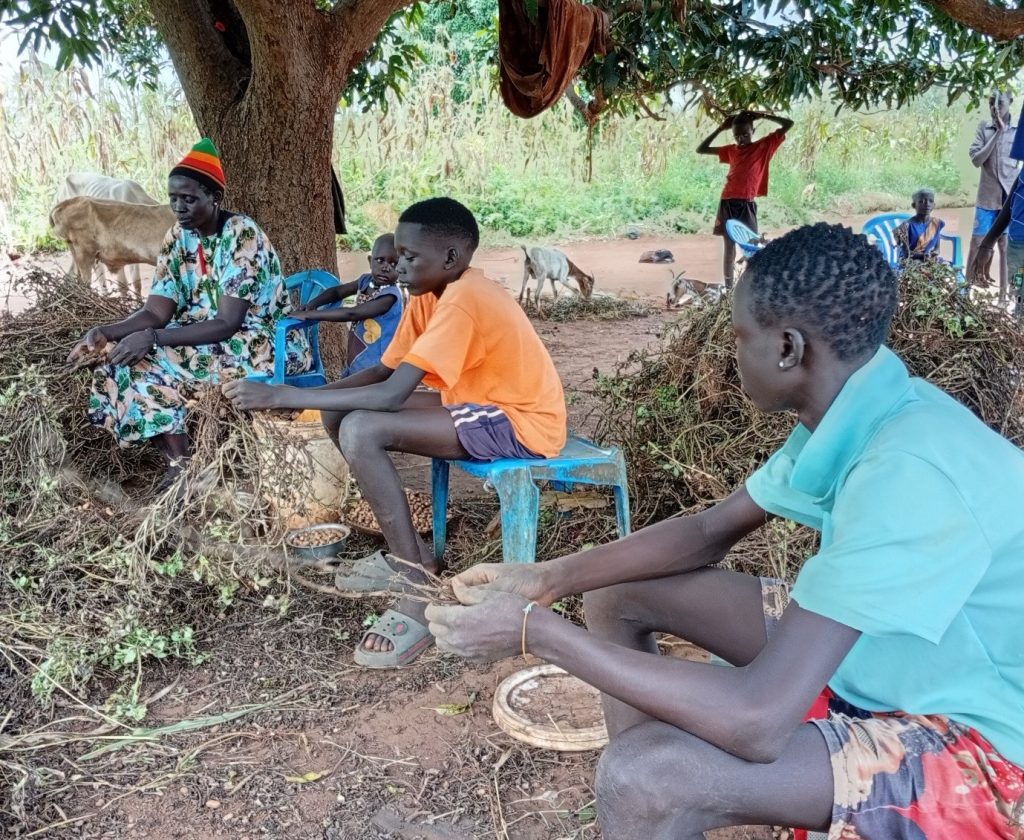
Photograph: Mary and her children harvesting their groundnut crop
Mary has also joined a Village Savings and Loan Association (VSLA), where she’s learnt how to save, borrow and manage money. The VSLA’s provide safe, supportive spaces where women like Mary can build confidence, share ideas and lean on each other. Mary’s group has created a social support fund to pay for school fees for orphaned children in their community, a powerful example of how women’s empowerment can create wider community impact.
“I didn’t know anything about saving before, but now, I save every week and take small loans to pay school fees for my six school-going children.” Mary.
Beyond farming and finance, the project has also established ‘Women and Girls’ Safe Spaces’ where participants can access psychosocial support and life-skills sessions. Here, Mary learns about gender equality and how to advocate for herself and others. In a country where insecurity and displacement can put women and girls at heighted risk of Gender-Based Violence (GBV), these spaces also serve as vital lifelines, supporting survivors to regain confidence and a sense of safety.
“I used to be quiet about my struggles, but I have confidence now to talk about my rights, and I support other women to know theirs too.” Mary.
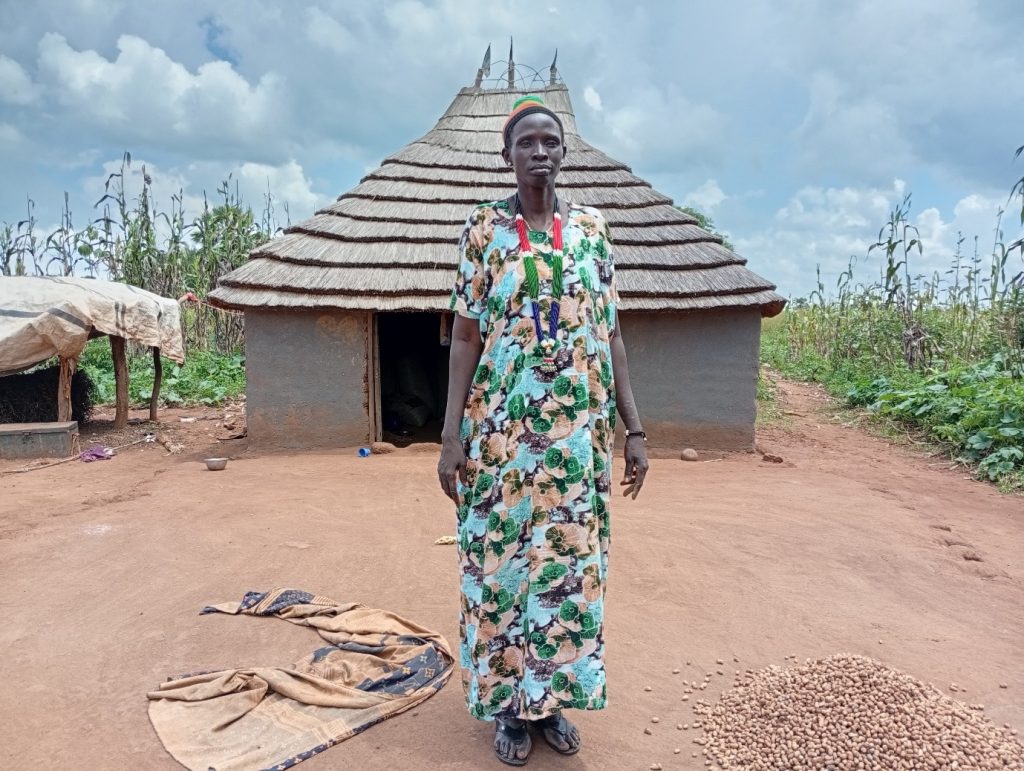
Photograph: Mary in her community
